Tag: #indiapictures

  • Kamrunag Shrine from Mahabharata times

    Kamrunag Shrine from Mahabharata times


    Enclosed by the snowy mountains, Kamrunag Shrine of Mandi is situated at an altitude of 3334 meters above sea level. It is believed that the Lord KamruNag wanted to participate in the great battle of Mahabharat. However, he was not allowed to take part in the battle. However, he witnessed the battle until its end.
    Kamrunag’s original name was Ratan Yaksha and he was a self-learned warrior. He practice by keeping Lord Vishnu’s idol in front of him and considered him as his master Guru. He got to know about the story of Mahabharat being fought in some far corner of Bharat and decided to take part in it. Brave and courageous he was, he decided to fight with the weaker party, which meant he was going to join the army of Kauravas.
    But his dream remains dream because Lord Krishan did not allow him to take part in battlefield.

    Disguised as a yogi, Lord Krishna appeared before the Yaksha. He asked him about his journey and told him about the hardships being experienced by wounded soldiers. Ratan Yaksha listened to the story and it strengthened his determination. Lord Krishan gave him a tough test to find out the strength of his arrows and said, “I will be convinced if you can pierce every leaf of that enormous peepal tree with thy arrow.” When the Yaksha was preparing his arrow, the Lord plucked some leaves and hid them in his closed fists. To his surprise, the arrow pierced even the leaves in his fists. Then Lord Krishan asked him about his guru, upon which the Yaksha replied it to be no one but the almighty himself.

    The yaksha could not resist and he had to offer what the Lord had asked for, his head. He gave away his head and asked the Lord to keep it alive until the Great War was over. The Lord immediately agreed and blessed him with the same, his head was brought to the Kamru Hill and today it is known as Kamrunag Temple.


    To witness the special ritual of immersing currency notes, gold and silver jewelry worth lakhs in the lakh, thousands of devotees visited Kamrunag Shrine. In Kamrunag temple money and jewellery offered by devotees is not deposited in the banks rather immersed in the lake water. This trend is being followed by centuries.
    The legends also say that villagers visit the lake and the temple to pray to the Rain God during summers and it is believed that only after prayers have been offered to the Lord, the rainy season marks its presence in the valley.


    Kamru Nag Lak
    Kamru Nag Lake has enormous religious significance in the region as the temple of one of most revered deities in Mandi, known as Kamrunag Dev is situated on the banks of lake. Pilgrims take holy bath during Kamrunag ‘jatar’ in the lake. A fair is held here on 14th of June every year. People make various offerings especially of gold ornaments, coins etc. People have been making offerings of gold and other precious metals and stones since centuries.

    Thus gold and other ornaments much more than anyone’s imagination lies buried in the depths of the holy lake of Kamrunag. Thieves have attempted several times in the past but without any success. During winters the lake is completely frozen.
  • First Heritage Village of India

    First Heritage Village of India


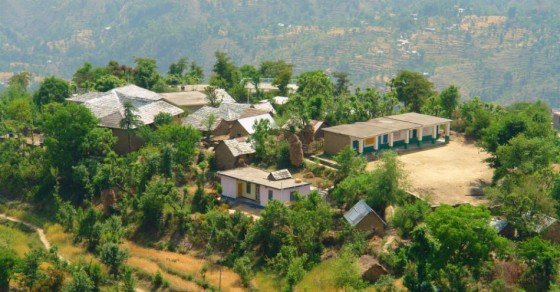
    Enclosed by the White Mountain ranges, Pragpur is a country’s first Heritage Village, founded in the late 16th century by the Kuthiala Soods in memory of Princess Prag Devi of the Jaswan Royal family.

    It is an ornamental village with unchanged shops, cobbled stone streets, old water tank, mud-plastered walls and slate-roofed houses. The narrow streets, lined with fort-like houses, havelis and villas are indicative of the aged charisma and remind much of enthralling and interest, especially among the foreign tourists.

    Due to its unique architecture and pristine beauty, the Himachal government declared it as a country’s first heritage Village in December 1997.


    Prag means pollen in Sanskrit and pur means full of, so Prag-pur means full of pollen, which rightly describes the area when it is ablaze with blossoms in spring. The buildings are preserved by panchayats and they only tell on new constructions. A number of heritage buildings are now being restored by using modern facilities in them to make an easy and comfortable stay for tourists.

    With its unique beauty and place, Pragpur offers angling opportunities in the Beas nearby and a panoramic view of the snow-capped majestic Dhauladhars.

    In the heart of village Pragpur there is a mansion called, The Judges Court, being run as a hotel by Mr Vijai Lal, who is the grandson of Justice Sir Jai Lal, the second Indian to become a Judge of the Punjab High Court. The Judge’s Court is a classified Heritage hotel, which offers an experience of the charm of good living in rural India. Surrounded by beautiful countryide, swelling hills and a rich eco-system .The Judges Court is a resort built-in a typical Anglo-Indian style of architecture.

    Apart from the Judges Court, which was built in 1918, Mr Lal has restored his 300-year-old ancestral house. Indian National Trust for Art and Cultural Heritage (INTACH) Heritage Village Pragpur provides ability for preservation of heritage at the village.

    The ancient glory of the village has been protected and rejuvenated by the Vijai Lal. He has taken the initiative to safeguard the Heritage village. “Tourism promotion is a key reason, but at the same time, we must make sure that it does not lose its charisma and uniqueness, while providing employment to locals,” Mr Lal says with emphasis.

    A specific colour code will be followed and all buildings will be in consistency with the medieval ambience of the village. The other places of interest within the Heritage Village Pragpur are the Lala Rerumal Haveli built in 1931 by a Rais of Pragpur, which has a Mughal style garden, pleasure terrace and a large water reservoir. Butail Mandir, Chaujjar Mansion, Courtyards of the Sood Clans, an ancient Shakti Mandir and Atiyalas or public platforms are the pride of this heritage village.

    There are many silversmiths in the market selling traditional trinkets and curios. The village is known for its cottage industry. The inhabitants in the area are mostly crafts people weavers, basket makers, silversmiths, painters, musicians and tailors. One can buy hand-woven blankets, shawls and hand-block printed clothes from here.

  • हिमाचल में 25 फरवरी से फिर बदलेगा मौसम का मिजाज

    हिमाचल में 25 फरवरी से फिर बदलेगा मौसम का मिजाज

    Shimla

    हिमाचल में 25 फरवरी से फिर बदलेगा मौसम का मिजाज, आज और कल खिली धूप रहेगी.

    हिमाचल में 25 फरवरी शनिवार से मौसम का मिजाज एक बार फिर बदलेगा। लंबाई वाले क्षेत्र में और बारिश होगी। वहीं, समतल क्षेत्र में समुद्र साफ हो जाएगा, लेकिन आज और कल मौसम साफ रहने से तापमान में छेद हो जाएगा।