



Preneeta Sharma
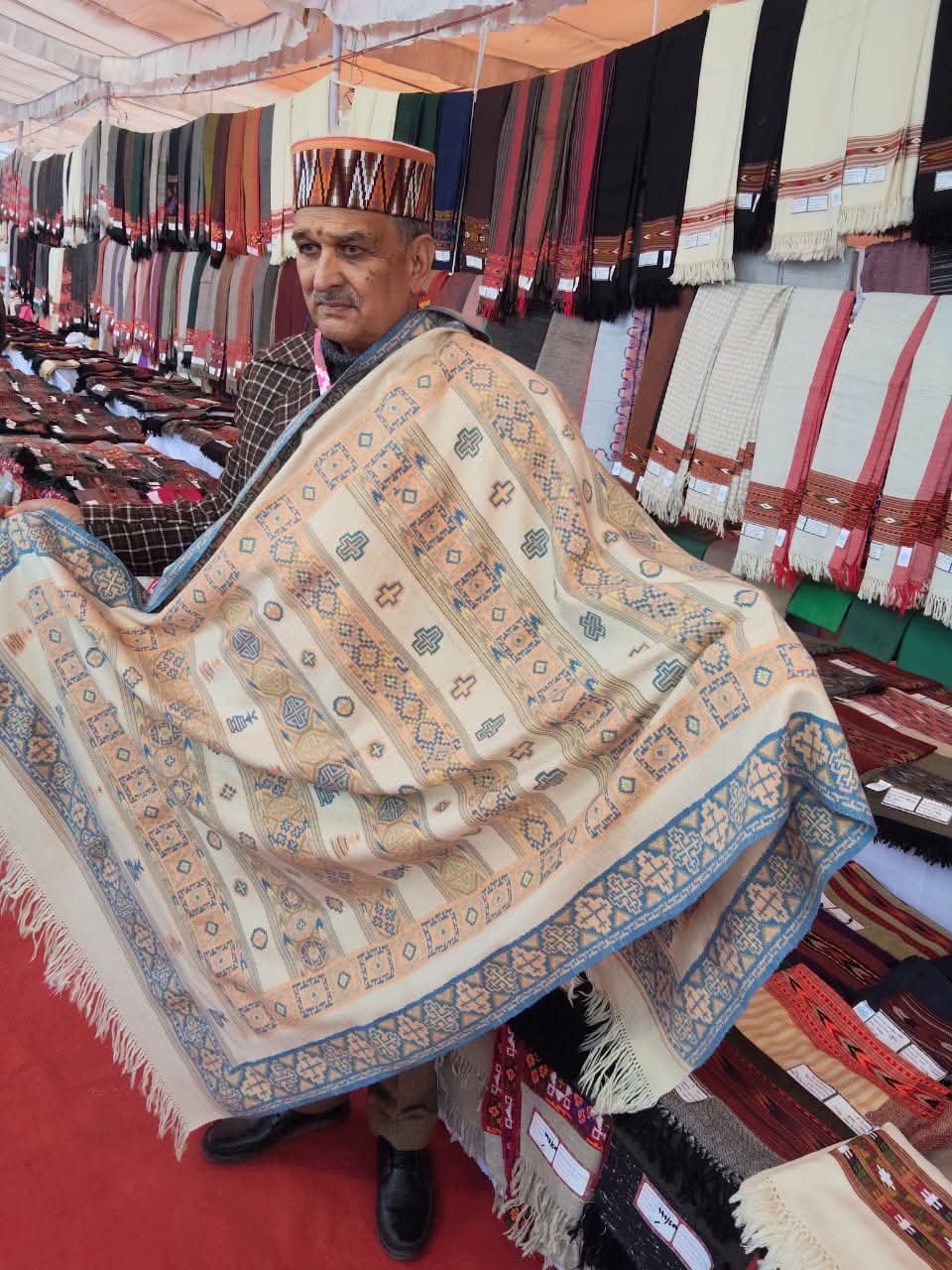
A long before apples and tourism put Rampur Bushahr on Himachal Pradesh’s economic map, the town had another identity woven into its history but the traditional Rampur shawl, also known as the Rampur chaddar. Made from Himalayan wool and shaped by the skill of local artisans, the warm, durable textile once travelled far beyond the mountain region. Now, a renewed recognition in early 2026 has raised hopes of bringing this fading craft back into the spotlight.
For Rampur, the revival of its shawl is about more than restoring an old product. It is about reconnecting a community with its craftsmanship, preserving a legacy of mountain trade and creating new opportunities for local weavers.
During British rule, Rampur Bushahr emerged as an important trading centre along routes connecting Tibet, Ladakh and the Indian plains. Wool and woollen textiles formed an important part of this trading economy, while traditional weaving supported the livelihoods of local communities.
Historical accounts suggest that the region once had around 2,000 shawl weavers and nearly 500 wool producers. Wool obtained from local sheep was spun by hand and woven on traditional looms into shawls and chaddars.
The appeal of Rampur shawls lay in their warmth, durability and sturdy texture. Although they were not considered as fine as Pashmina, they served an important purpose: providing practical, affordable woollen clothing suited to the harsh conditions of the mountains.
The shawl became more than a piece of fabric. It represented the relationship between local resources, traditional knowledge and the needs of people living in the Himalayan region.
As Rampur shawls gained popularity, imitation products began to pose a challenge. Historical accounts refer to shawls manufactured in cities such as Ludhiana and Amritsar being marketed under the Rampur name. While this reflected the product’s growing reputation, it also made it harder for consumers to distinguish authentic handwoven textiles from mass-produced alternatives.
Over time, changing fashion preferences, the expansion of industrial textile production and inadequate institutional support for traditional weaving weakened the craft’s position in the market.
As newer fabrics became widely available, the skills and livelihoods associated with handloom production came under increasing pressure. Rampur’s once-familiar textile gradually slipped from public attention, even as its historical and cultural value remained.
The latest recognition for Rampur shawls in early 2026 has renewed hopes for the craft’s revival. According to Himachal Pradesh Industries Department Director Aditya Negi, the traditional textile received significant recognition at the beginning of the year.
The development is being seen as an opportunity to bring greater attention to Himachal’s handloom heritage and the artisans who have kept its traditions alive. Greater visibility could also help strengthen product branding, expand marketing opportunities and connect local weavers with new buyers.
However, recognition alone cannot guarantee revival. The real test will be whether renewed interest translates into regular orders, better earnings for artisans and sustained demand for authentic Rampur shawls.
For the craft to regain a lasting place in the market, its heritage must be supported by a practical economic strategy. Documenting traditional designs, training younger weavers and adapting products to contemporary tastes could help make Rampur shawls relevant to a new generation of consumers without compromising their identity.
Digital platforms and e-commerce could provide access to buyers beyond Himachal Pradesh, including customers interested in handmade textiles and region-specific crafts. Stronger branding, transparent information about the origin of products and direct links between artisans and consumers could further improve the prospects of genuine handwoven shawls.
The possibility of geographical indication (GI) protection could also be explored, subject to the applicable eligibility requirements and verification of the product’s distinct regional identity. Such protection, where available, can help distinguish a traditional product associated with a particular place.
Equally important is the need to make weaving economically viable for younger generations. If traditional craftsmanship is to survive, artisans must be able to earn a sustainable income from their work rather than preserve the craft solely as a cultural responsibility.
Rampur’s textile heritage tells a larger story of Himalayan life, the trade routes that connected distant regions, wool drawn from local landscapes and skills passed from one generation to the next.
The renewed recognition in 2026 offers an opportunity to bring that story back into public view. But the future of the Rampur shawl will depend on what follows: sustained market access, institutional support, authentic branding and a new generation willing to carry the tradition forward.
For a town increasingly associated with apples and tourism, the revival of the Rampur shawl could restore another dimension of its identity. The challenge now is to ensure that a craft once woven into everyday life does not remain only a memory of the past, but becomes a source of livelihood and cultural pride for the future.