


Shimla
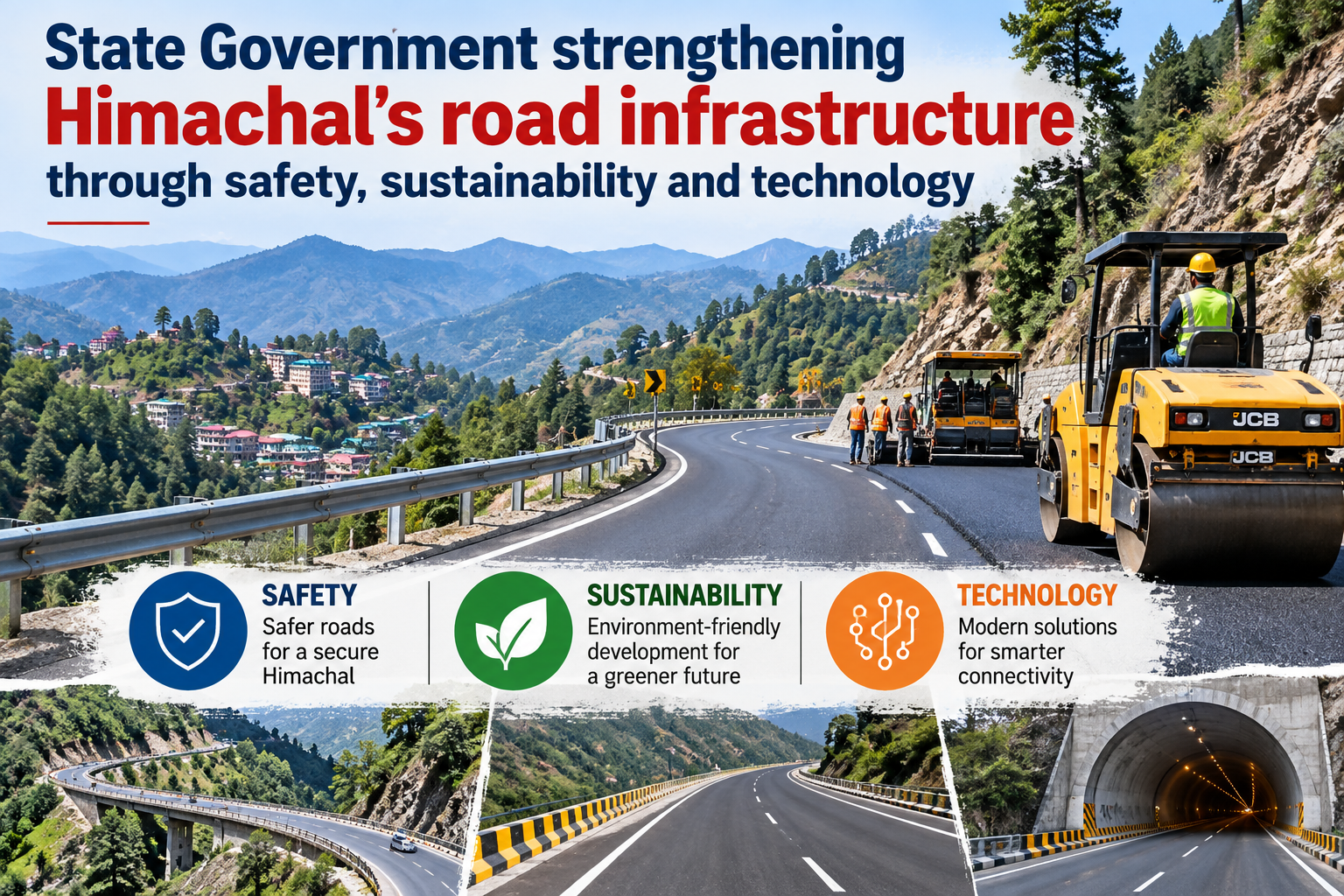
Under the leadership of Chief Minister Thakur Sukhvinder Singh Sukhu, the Himachal Pradesh Government is taking several steps to improve the State’s road infrastructure. The focus is not only on building new roads but also on making existing roads safer, stronger and more reliable.
Roads are especially important in Himachal Pradesh because they connect remote villages with markets, hospitals, schools and other essential services. They also support agriculture, horticulture, industry and forestry. As of 31 August 2026, Himachal Pradesh has 41,903 kilometres of motorable roads connecting 15,608 census villages. Maintaining such a large road network in difficult mountainous terrain is a major challenge.
Water is one of the main causes of road damage in hilly areas. To address this problem, the State Government approved the Road Drainage Policy in February 2026. The policy gives greater importance to proper drainage during road planning and construction. Drainage systems will be designed according to rainfall and the nature of the surrounding area. Special attention will be given to places prone to landslides and water seepage. Steps are also being taken to prevent the misuse or blockage of road drains so that roads remain in better condition for longer.
The Government has also notified guidelines for jeepable and ambulance link roads. These guidelines provide common standards for the construction and maintenance of smaller roads connecting remote areas. These cover important aspects such as road width, pavement, drainage, retaining and breast walls, slope protection and road safety. Better standards for these roads will help remote communities get more dependable access to hospitals, markets and other essential services.
Building roads is only one part of the task. Protecting existing road infrastructure is equally important. The Himachal Pradesh Road Infrastructure Protection (Amendment) Bill, 2026, passed by the State Assembly in September, provides for digital and geo-coordinated mapping of road infrastructure. It also aims to improve enforcement and help in the faster restoration of damaged road assets.
Technology is being used to improve the way roads are managed. A centralized Road Status Information System is being planned to provide information about road closures, restoration work and connectivity, especially during the monsoon and other disasters.
The Works and Accounts Management Information System (WAMIS) is also being introduced. It will bring measurements, billing and other works and accounts-related activities onto a common digital platform. This can make the management of public works more efficient and improve access to information.
Road safety is another important priority. The Road Safety Audit Policy, approved in July 2026 provides for safety audits at different stages of road projects. This will help identify and correct safety problems during the design and construction stages, as well as on existing roads.
A dedicated Road Safety Cell is also being established at the Public Works Department headquarters to strengthen road safety arrangements. The Government is also working to make road repairs more systematic. A Standard Operating Procedure for patch work provides common guidelines for repairing potholes and damaged road surfaces. It specifies materials, methods and timelines and also fixes greater responsibility for timely repairs.
New technologies are being tested on a pilot basis. These include Cement Grouted Bituminous Macadam (CGBM) for stretches affected by drainage problems and CEMECO Technopatch-EX for patch repairs during the monsoon.
The State government is also exploring the use of underground multi-utility ducts. These ducts can carry water, electricity and telecommunications services through common corridors. This can reduce the need for repeated digging and cutting of roads for utility work, helping to protect road surfaces and reduce inconvenience to the public.
These measures show a shift from simply constructing more roads to managing the entire road network in a planned and preventive manner. Better drainage, stronger safety measures, digital monitoring, improved maintenance and modern technologies can help Himachal Pradesh build roads that are safer, more durable and better suited to its difficult mountain conditions.
The overall aim is to ensure that roads remain dependable throughout the year and continue to provide people across the State with better access to essential services, markets and economic opportunities.