


India Moves 17 Amendments at IPU Standing Committee to Advance a Practical, Balanced and Rights-Based Global Resolution
7 October 2026, Hamirpur/Arusha, Tanzania:
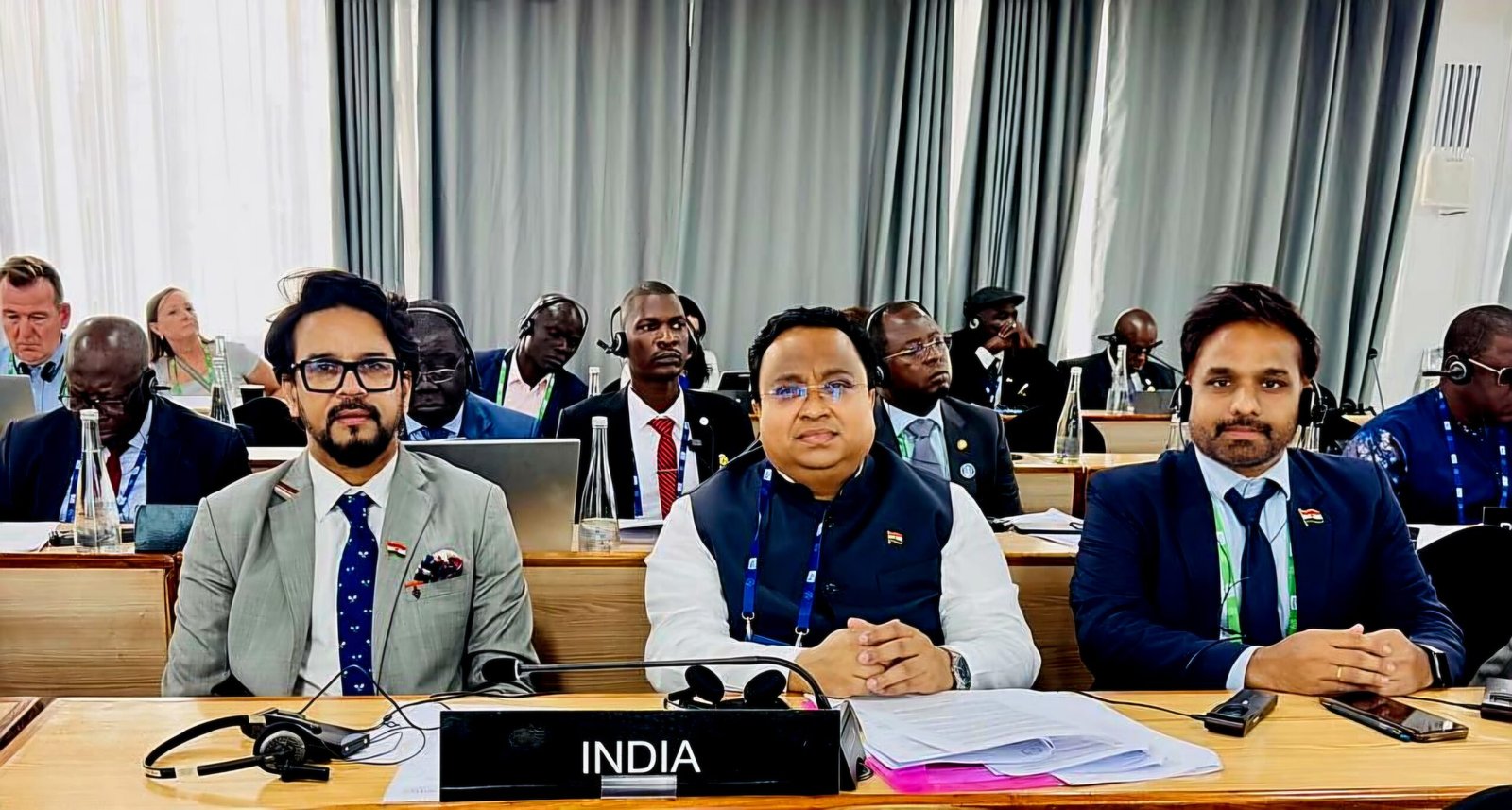
Former Union Cabinet Minister and senior Parliamentarian Anurag Singh Thakur strongly articulated India’s commitment to the rights and empowerment of persons with disabilities during the 153rd Assembly of the Inter-Parliamentary Union (IPU) in Arusha, Tanzania.
Participating in the deliberations of the IPU Standing Committee on Democracy and Human Rights on the draft resolution concerning inclusive social development and parliamentary strategies to promote the rights and empowerment of persons with disabilities, Anurag Singh Thakur emphasized that disability rights cannot be viewed merely through the prism of charity, welfare or passive social policy. He asserted that inclusion is fundamentally a matter of human rights, human dignity, equality and meaningful democratic participation.
Highlighting India’s transformative legal framework, Anurag Singh Thakur placed the Rights of Persons with Disabilities (RPwD) Act, 2016 at the center of the global legislative discussion. He stated that India’s comprehensive statutory framework provides an important model by embedding non-discrimination, universal accessibility, equal opportunity and full participation in society within an enforceable legal framework.
He cautioned against limiting disability rights to symbolic declarations and emphasized that rights on paper must translate into adequate resources, accessible institutions and measurable outcomes to bring tangible improvements to the everyday lives of persons with disabilities.
Calling upon parliamentarians across the world to effectively exercise their legislative, budgetary and oversight mandates, Anurag Singh Thakur stressed the need to mainstream disability perspectives across all areas of public policy. He highlighted education, healthcare, employment, public transport, housing, justice, digital transformation and disaster management as critical sectors where inclusive governance must be systematically integrated.
He further emphasized that evidence-based policymaking, reliable and disaggregated data systems and effective institutional coordination are essential to bridge the gap between policy intent and ground-level implementation. He underlined the importance of ensuring that persons with disabilities are meaningfully involved in decisions that affect their lives, making participation an integral part of institutional governance.
Leading India’s active engagement in the committee’s deliberations, Anurag Singh Thakur outlined India’s key interventions aimed at making the draft resolution more concise, legally coherent and implementable. On provisions relating to legal capacity and decision-making regimes, India proposed amendments to ensure that reforms concerning guardianship or institutionalisation are assessed in accordance with respective national legal frameworks. The objective is to prevent restrictive substitute decision-making while safeguarding legitimate supportive arrangements recognized under domestic law.
He also highlighted the importance of fiscal pragmatism. He advocated that global resolutions should encourage parliaments to promote disability-responsive budgeting and adequate resource allocation, while avoiding rigid and uniform budgetary prescriptions that may not align with the distinct constitutional and statutory structures of different countries.
With the objective of aligning the global resolution with practical implementation realities, Anurag Singh Thakur moved a total of 17 amendments covering both the preambular and operative sections of the draft resolution.
The core thrust of India’s amendments was to harmonize international recommendations with sovereign constitutional and domestic legal systems, promote flexible yet robust disability-responsive budgeting, and strengthen data privacy and protection safeguards in monitoring mechanisms. India’s proposals also sought to appropriately reflect established domestic policies while urging international institutions and the IPU to prioritize capacity building, voluntary reporting and equitable access to accessible and assistive technologies, particularly for developing countries.
Reaffirming India’s proactive and constructive role in multilateral parliamentary diplomacy, Anurag Singh Thakur appreciated the efforts of the co-rapporteurs in developing an ambitious foundation for the resolution and urged member parliaments to adopt a balanced, practical and rights-based approach.He reiterated India’s resolve to contribute towards building an accessible, dignified and barrier-free world where persons with disabilities are not viewed merely as beneficiaries of welfare measures, but as equal partners and active leaders in advancing social, economic and democratic progress.