


Calls for Reclaiming Bharat’s Civilizational Frameworks in Law and Public Policy
New Delhi, September 25, 2026
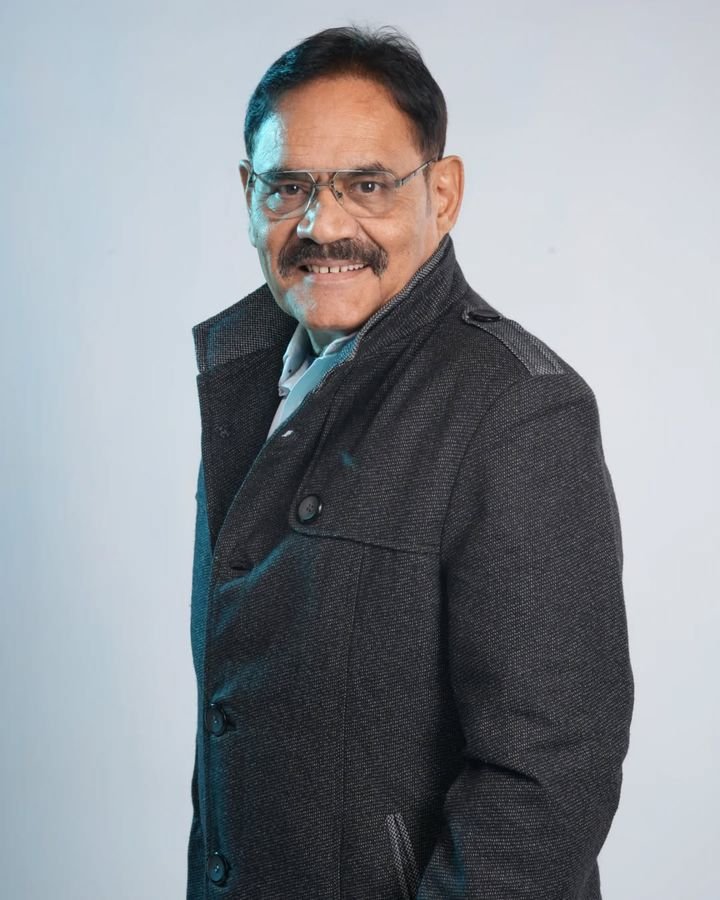
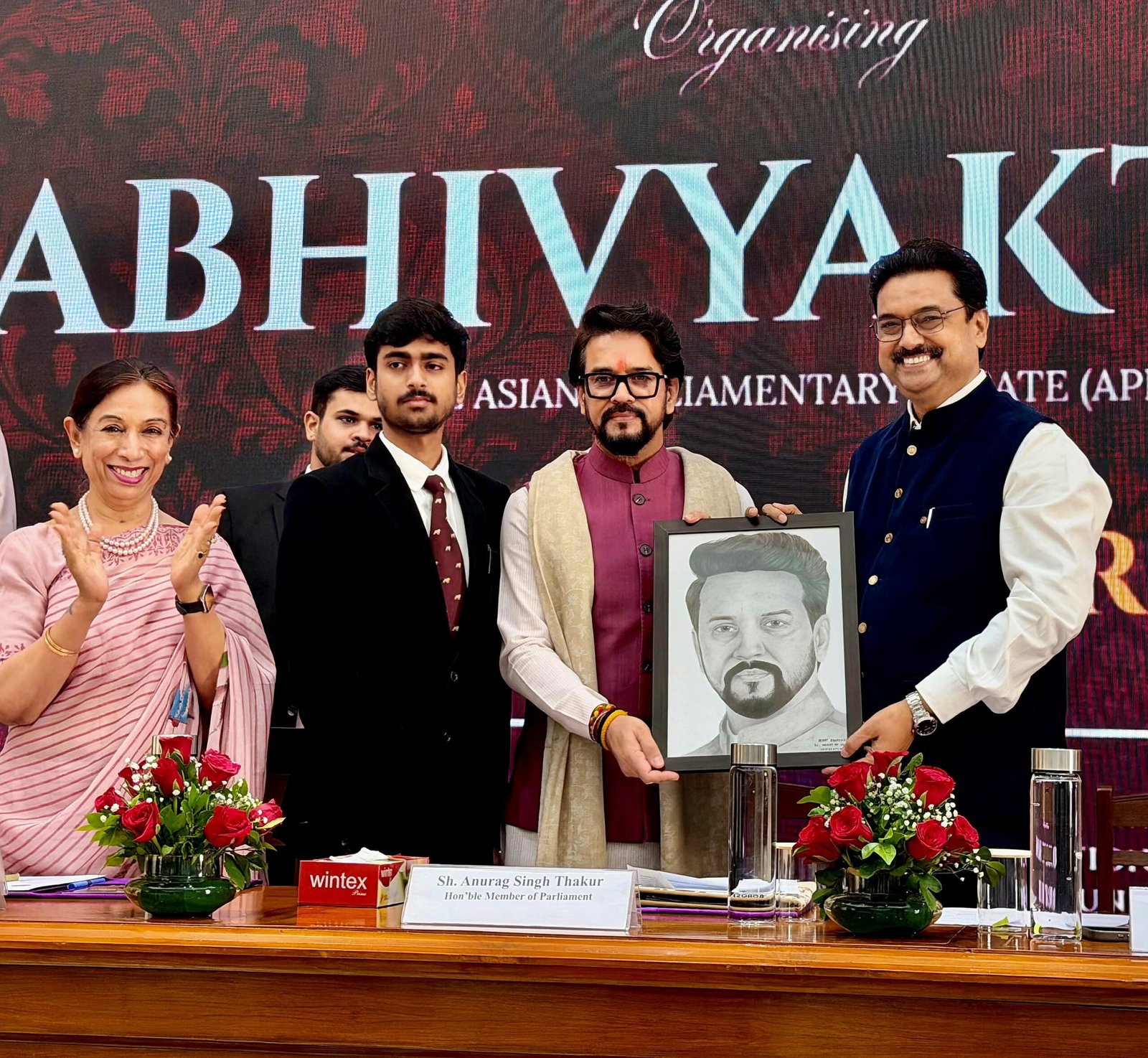
Former Union Cabinet Minister and Lok Sabha MP Anurag Singh Thakur, addressing the valedictory session of Abhivyakti 1.0, Asian Parliamentary Debate Competition, organised by the 5-Year Integrated Law Course of the Faculty of Law, University of Delhi, said that democratic deliberation, dialogue and open debate are integral to Bharat’s civilizational consciousness and should not be viewed as concepts imported from the West. The event was organised by the Literary and Debating Society of the Integrated Law Course and was designed to promote informed, constructive and rigorous discourse.
Speaking on the central theme, Decolonizing Discourse: Reclaiming Bharat’s Civilizational Heritage in Contemporary Policy, Anurag Singh Thakur highlighted the long-standing Indian traditions of dialogue and participatory governance. Referring to ancient institutions such as the Vedic Sabha and Samiti and the Uthiramerur inscriptions associated with the Chola period, he said that concepts of decentralisation, participation and consensus-based decision-making have existed within Indian traditions for centuries.
He said Indian universities and intellectual institutions must move beyond exclusively Eurocentric frameworks and develop a deeper sense of Swa-Bodh, or civilizational self-realisation. He emphasised the need to connect India’s indigenous traditions of reasoning, justice and Loka Kalyan with contemporary discourse, law and public policy.
Emphasising the power and responsibility of expression, Anurag Singh Thakur said that in Dharmic thought, Vāk is not merely a mechanical instrument of rhetoric but a means dedicated to the pursuit of Satya and the establishment of Dharma. He reminded law students that words spoken in courtrooms carry immense responsibility, as legal arguments and interpretations can influence judicial reasoning and legal precedents with consequences for society at large.
Referring to the Indian tradition of Shastrartha, he said debate has historically been regarded as a pursuit of truth rather than an exercise in personal ego. Invoking the spirit of Vade Vade Jayate Tattva Bodhah, he encouraged students to embrace continuous dialogue, questioning and reasoned argument as means of arriving at deeper understanding.
Drawing upon Pandit Deendayal Upadhyaya’s philosophy of Ekatma Manavdarshan, Anurag Singh Thakur said society must be viewed as an interconnected whole rather than merely as a collection of competing individual interests. He urged future legal professionals to recognise the importance of balancing individual rights with civic duty and Kartavya.
Highlighting initiatives aimed at strengthening national unity, he referred to programmes such as Kashi Tamil Sangamam and Saurashtra Tamil Sangamam under the Ek Bharat Shreshtha Bharat initiative. He said such initiatives strengthen dialogue, cultural understanding and connections among different regions, languages and traditions of the country.
Speaking about Left-Wing Extremism, Anurag Singh Thakur referred to official data from the Ministry of Home Affairs, according to which the number of LWE-affected districts had declined from 126 in 2018 to eight in December 2025, with three districts remaining in the Most LWE Affected category at that time. He also expressed concern about what he described as ideological forms of extremism and attempts to create social division and anarchy.
He used the term intellectual Naxalism to describe what he alleged were attempts by some individuals in academic and other institutions to undermine India’s identity and distort its history. He said that any mindset that seeks to weaken India’s civilizational identity cannot be aligned with the objective of building a Viksit Bharat.
Anurag Singh Thakur placed before the students a three-word framework: Shastra for the defence of the nation, Shastra for the guidance of society through scriptures and Shastrartha for the pursuit of truth and preservation of the Indian knowledge tradition.
Turning to the practical dimensions of the legal profession, he said debate is not merely a courtroom skill but a foundational instrument for advancing substantive justice and shaping the development of law. He urged young legal professionals to understand that their arguments, interpretations and advocacy can influence legal reasoning and have consequences far beyond an individual case.
He said rigorous advocacy and constructive debate can enable young jurists to translate civilizational wisdom into effective public policy, legislation and ethical frameworks. He also stressed the importance of ensuring that public discourse balances individual rights with civic responsibilities and duties.
Concluding his address, Anurag Singh Thakur called upon the next generation of legal professionals to regard their profession as a sacred responsibility. He urged them to employ their legal knowledge, arguments and advocacy skills in the service of Antyodaya, ensuring justice and opportunity for the last person, while contributing to India’s progress and its pursuit of a higher place in the global community.