


PRENEETA SHARMA
As the road winds through the lower Himalayas, the bustle of Shimla gradually fades behind towering deodars, cool mountain air and drifting mist. Somewhere along the forested stretch between Dhalli and Kufri lies Hassan Valley, a quiet corner of the Shimla hills that appears at first to be just another scenic mountain road. Yet behind its greenery is an unusual story,one that begins not with a king, a ruler or a legendary figure, but with an ordinary taxi driver whose daily journeys, according to local oral tradition, eventually gave his name to the landscape.
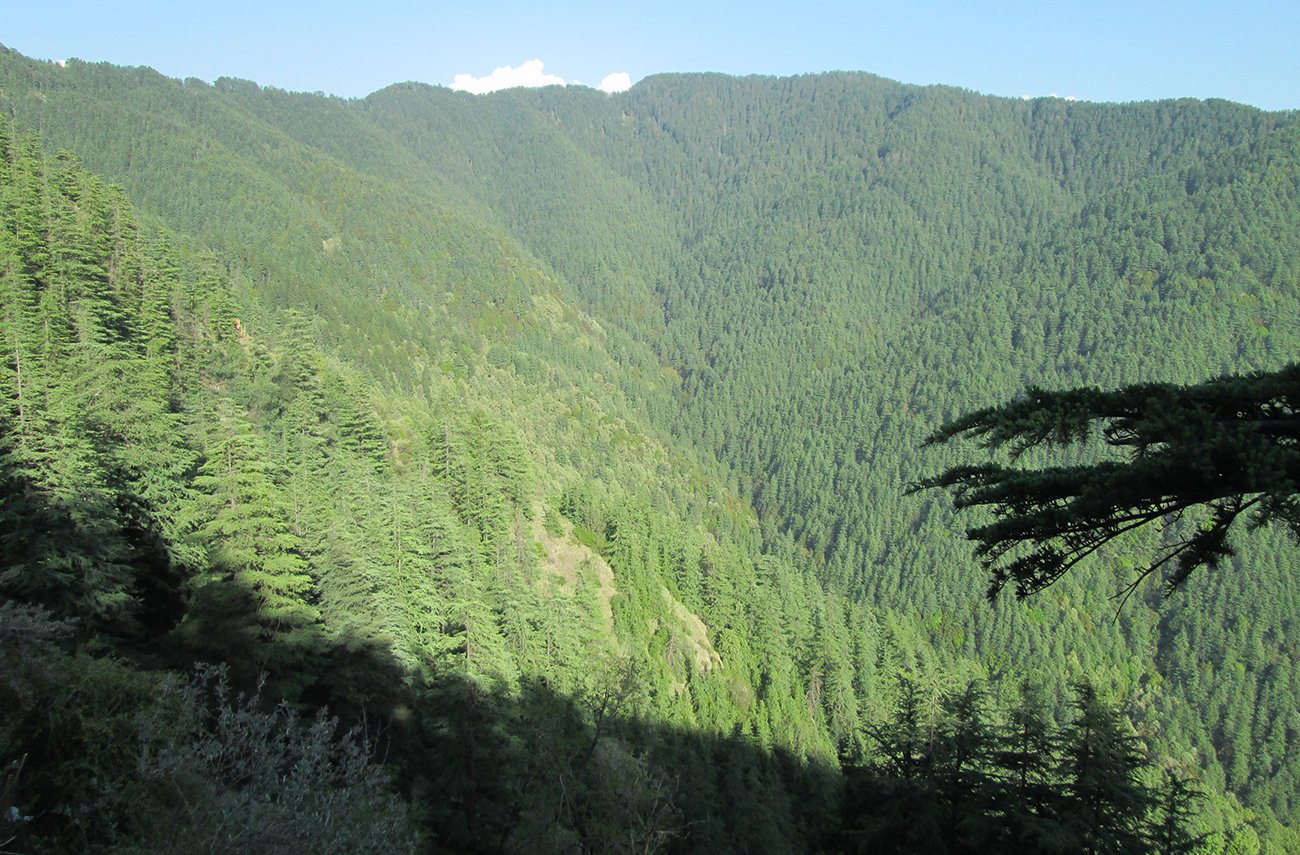
Hassan Valley is associated with the forest corridor around Dhalli, Kufri and Mundaghat, extending towards the Chail side and lying along routes frequently used by tourists travelling towards destinations such as Fagu and Narkanda. Despite being close to one of Himachal Pradesh’s busiest hill stations, the area retains a remarkably peaceful character. Dense deodar forests dominate the landscape, with oak, pine and rhododendron adding to the rich vegetation. The thick canopy filters sunlight, holds moisture and creates a cool microclimate, giving travellers the feeling of entering a completely different world as soon as the road disappears beneath the trees.
The forest is more than a scenic backdrop. Its ecological role is closely connected with the health of the surrounding Himalayan landscape. Dense vegetation helps reduce soil erosion, retain moisture and support natural water systems, while the forest provides habitat for birds, small mammals and other wildlife. Forested catchments also contribute to the functioning of springs and streams in the hills, making such landscapes important to the wider water security of the Shimla region. What may look like an ordinary green corridor from a passing vehicle is, in reality, part of a natural system that quietly supports life around it.
For travellers, however, the first experience of Hassan Valley is often its silence. Even during the warmer months, the forest can feel noticeably cooler. The sound of wind moving through deodar branches, occasional bird calls and the distant hum of vehicles create a natural rhythm. Cars slow down as the road curves through the trees, while the mist and filtered sunlight give the landscape an almost cinematic quality. Unlike crowded tourist destinations, the valley does not need elaborate attractions to make an impression. Its appeal lies in the forest itself.
But the most intriguing part of Hassan Valley is its name. According to local oral accounts, a taxi driver named Hassan regularly travelled along this route while carrying passengers through the Shimla hills. He reportedly used to stop at a particular stretch of the forest, either to rest during his journeys or to spend a few quiet moments in the familiar surroundings. Over time, fellow drivers and local people began referring to the spot as “Hassan ka valley”. The expression was gradually repeated in everyday conversation until Hassan’s name became associated with the forest itself.

There was reportedly no formal naming ceremony, official announcement or grand monument to establish the identity. The name survived because people continued to use it. It travelled from one driver to another, from locals to visitors and eventually became part of the oral geography of the region. In that sense, Hassan Valley represents a fascinating example of living local heritage, where a landscape acquires its identity through memory and everyday human interaction.
The story is particularly striking because Shimla and its surrounding areas are filled with places associated with rulers, colonial officials, temples, legends and historic personalities. Hassan Valley offers a very different kind of story. Here, the name is linked, according to local tradition, to a working man whose ordinary routine became part of the collective memory of the road. Hassan may not have intended to leave a mark on history, but his repeated presence appears to have done exactly that.
Today, the valley faces many of the challenges confronting Himalayan forests. Growing traffic, roadside litter, noise, tourism pressure and gradual development can place stress on fragile ecosystems. A forest may look resilient, but constant disturbance can affect vegetation, soil, water systems and wildlife over time. Protecting Hassan Valley therefore requires more than appreciating its beauty. Visitors, motorists and local communities all have a role in keeping the forest clean, quiet and free from unnecessary disturbance.
What makes Hassan Valley truly special is the way nature and memory come together. The deodar trees tell the story of the mountain landscape, the road tells the story of generations of travellers, and the name carries the memory of a taxi driver whose life became connected with this quiet stretch of forest. It is a reminder that not every piece of history is preserved in books or monuments. Sometimes, history survives in a name repeated so many times that it becomes inseparable from the place itself.
The next time the road bends through the cool green forests of the Shimla hills, Hassan Valley may appear to be just another beautiful stretch of the Himalayas. But beneath the deodar canopy lies a story of a man, a road and a name that endured. There is no grand monument to Hassan here; the valley itself is the monument. And perhaps that is what makes the story so memorable—a simple name, carried through countless journeys, quietly becoming part of the landscape of Himachal Pradesh.