


WAKNAGHAT, September 17, 2026
What does it take to move from a classroom at Jaypee University of Information Technology (JUIT) to a product table at Microsoft? For Saral Nigam, the answer lies not in shortcuts, but in patience, consistent learning and the deliberate compounding of skills.
Nigam, a CSE alumnus of the 2016 batch of JUIT and now Senior Product Manager at Microsoft, shared his career journey with students during an Alumni Talk held at the university on September 15. He has previously worked with Amazon and HashedIn, experiences that have shaped his transition into product management.
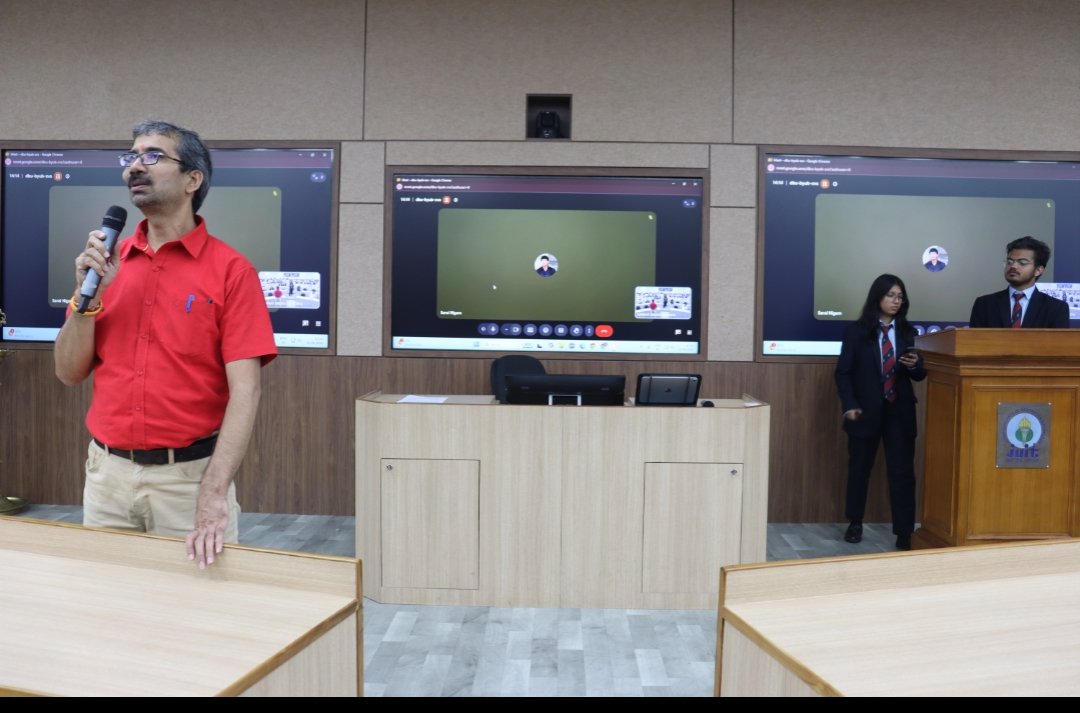
The session, held on Engineers’ Day and graced by the Vice Chancellor, drew a packed audience at the Digital Learning Centre (DLC). Students listened to an candid account of Nigam’s professional journey and the lessons he gathered while working across technology and product-focused organisations.
“There is no dead end, only slower paths,” was one of the central messages of the interaction, reflecting Nigam’s emphasis on viewing career growth as a gradual process rather than a race towards designations.
A four-year roadmap for engineering students
Nigam outlined a year-wise approach for students looking to build careers in technology.
For first-year students, he stressed exploration, strong programming fundamentals, mastery of at least one language and regular practice of Data Structures and Algorithms (DSA).
The second year, he said, should focus on building real-world projects, maintaining a disciplined Git workflow and translating classroom knowledge into practical work.
By the third year, students should focus on internships, identifying areas of specialisation and gaining exposure to real engineering environments. The fourth year, he suggested, should be used to sharpen expertise in a flagship domain and prepare for professional opportunities.
Among the practical habits he recommended was the “one DSA problem a day” approach, aimed at developing consistency rather than relying on last-minute preparation.
AI, debugging and the ability to ship
Nigam also spoke about the changing role of artificial intelligence in technology careers. Rather than treating AI tools as shortcuts, he encouraged students to follow the progression: “Use → Build → Understand → Own.”
He highlighted debugging, shipping products and becoming fluent in AI-assisted development as increasingly important skills for engineering professionals.
The session also provided students with an overview of the Big Tech recruitment process, covering shortlisting, screening, technical interviews and behavioural rounds. Nigam explained the importance of demonstrating not only technical knowledge but also problem-solving ability, judgement and the capacity to make decisions in real-world situations.
The interaction concluded with an engaging question-and-answer session, allowing students to seek insights into careers, interviews, technical preparation and professional growth.
For JUIT students, the alumni interaction offered a practical perspective on what happens after graduation—and how sustained effort, curiosity and the willingness to keep learning can shape a career over time.