



Emory University’s former director Dr Lobsang Tenzin Negi attends as chief guest
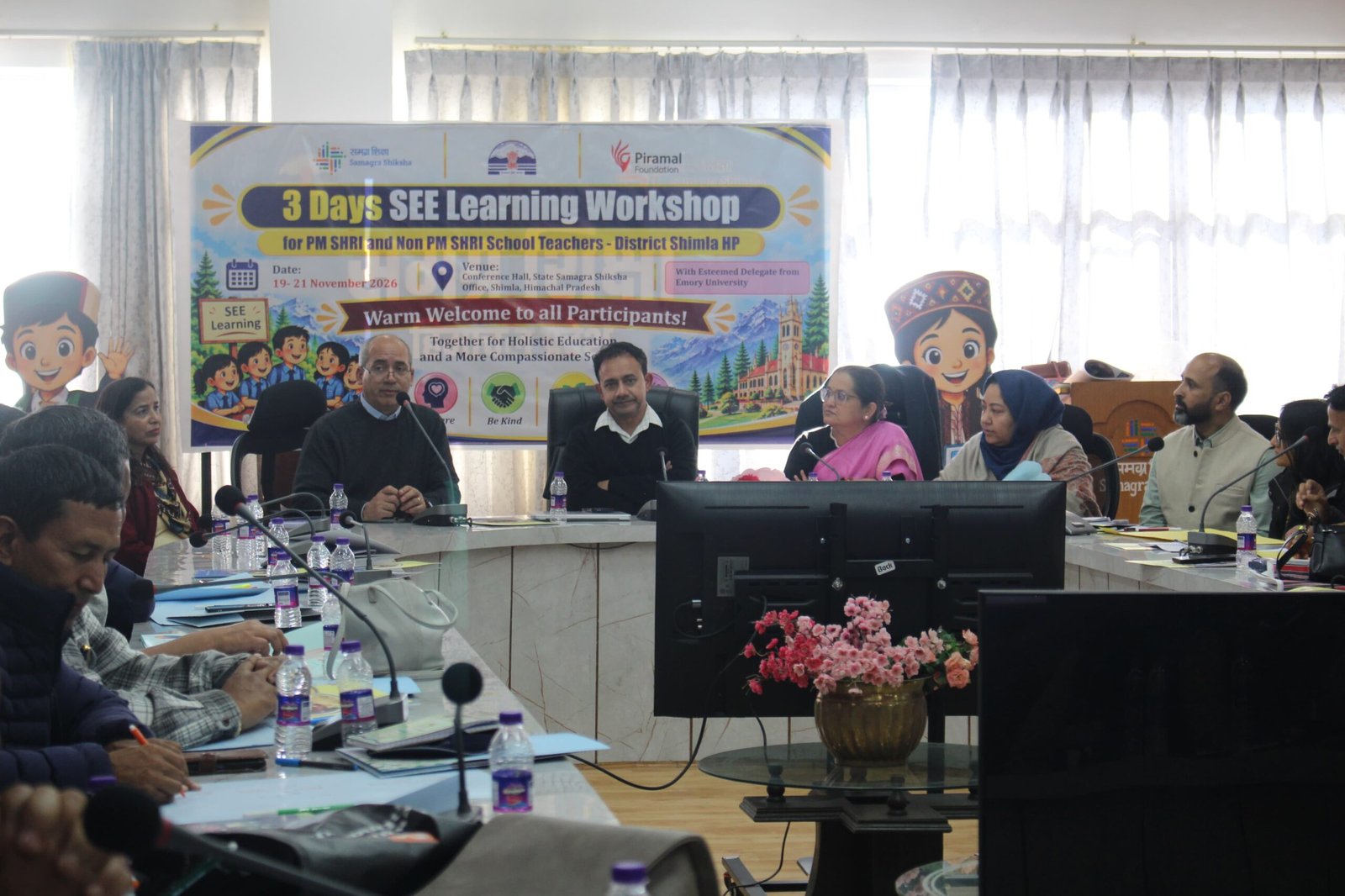
Shimla: A three-day workshop on Social, Emotional and Ethical (SEE) Learning began at the Directorate of Samagra Shiksha in Shimla on Wednesday, with the aim of equipping teachers with skills to foster emotional awareness, empathy and compassion among students.
The workshop is being organised by Samagra Shiksha in collaboration with the Piramal Foundation. It seeks to familiarise teachers with various aspects of social, emotional and ethical learning and help them create sensitive, inclusive and collaborative classroom environments.
Dr Lobsang Tenzin Negi, former director of the Centre for Contemplative Science and Compassion-Based Ethics at Emory University, USA, attended the inaugural session as the chief guest. Tsondue Samphel, Co-Director of SEE Learning, was also present.
Additional Director (School Education) B.R. Sharma, Samagra Shiksha’s nodal officer, Piramal Foundation Senior Programme Director Zeeshan Hasan and Programme Manager for Himachal Pradesh Rajendra Thakur were among those present. Teachers from PM SHRI and non-PM SHRI schools in Shimla district, along with specially invited teachers from Lahaul-Spiti and Kinnaur, are participating in the workshop.
Focus on emotional awareness and self-regulation among children
Dr Lobsang Tenzin Negi highlighted the growing concerns surrounding mental stress, emotional challenges and substance abuse among children. He emphasised that understanding children’s emotional needs and helping them recognise and regulate their emotions has become increasingly important in the changing social environment.
He said several countries were working towards strengthening social and emotional learning, while Emory University’s SEE Learning programme brings together India’s traditional knowledge systems and modern scientific research.
The programme incorporates mindfulness, self-management, compassion, empathy and a sense of interconnectedness. He stressed that developing awareness of emotions is the first step towards regulating them effectively, adding that mindfulness, compassion and sensitivity should become integral components of modern education.
Tsondue Samphel underlined the importance of teachers understanding their roles and responsibilities. He said values such as compassion, sensitivity and mutual cooperation were deeply rooted in India’s knowledge and cultural traditions and needed to become part of school education and everyday practices.
He encouraged teachers to understand children’s emotions, listen to them attentively and provide them with an opportunity to express themselves without prejudice. Even listening to a child patiently and respectfully, he said, could bring about a significant positive change.
Teachers introduced to three dimensions of SEE Learning
During the workshop, participants were introduced to the individual, social and systemic dimensions of SEE Learning. The individual dimension focused on mindfulness, self-awareness, self-compassion and emotional self-regulation, while the social dimension emphasised empathy, compassion towards others and the development of positive relationships.
Practical sessions included mindful listening, group activities and mindfulness exercises, enabling teachers to understand how safe, joyful and collaborative classroom environments can be created.
The workshop also highlighted the crucial role of teachers’ behaviour, attentive listening and classroom atmosphere in nurturing compassion, kindness and emotional balance among children.
The state government is implementing the SEE Learning programme in Himachal Pradesh schools through Samagra Shiksha. Developed by Emory University’s Centre for Contemplative Science and Compassion-Based Ethics in the US, drawing on the teachings of the Dalai Lama, the programme aims to nurture mindfulness, concentration, emotional awareness, self-control, compassion, empathy, resilience and social responsibility among students.