



Research, campus growth and sustainable innovation to shape the university’s next chapter
Solan, October 16
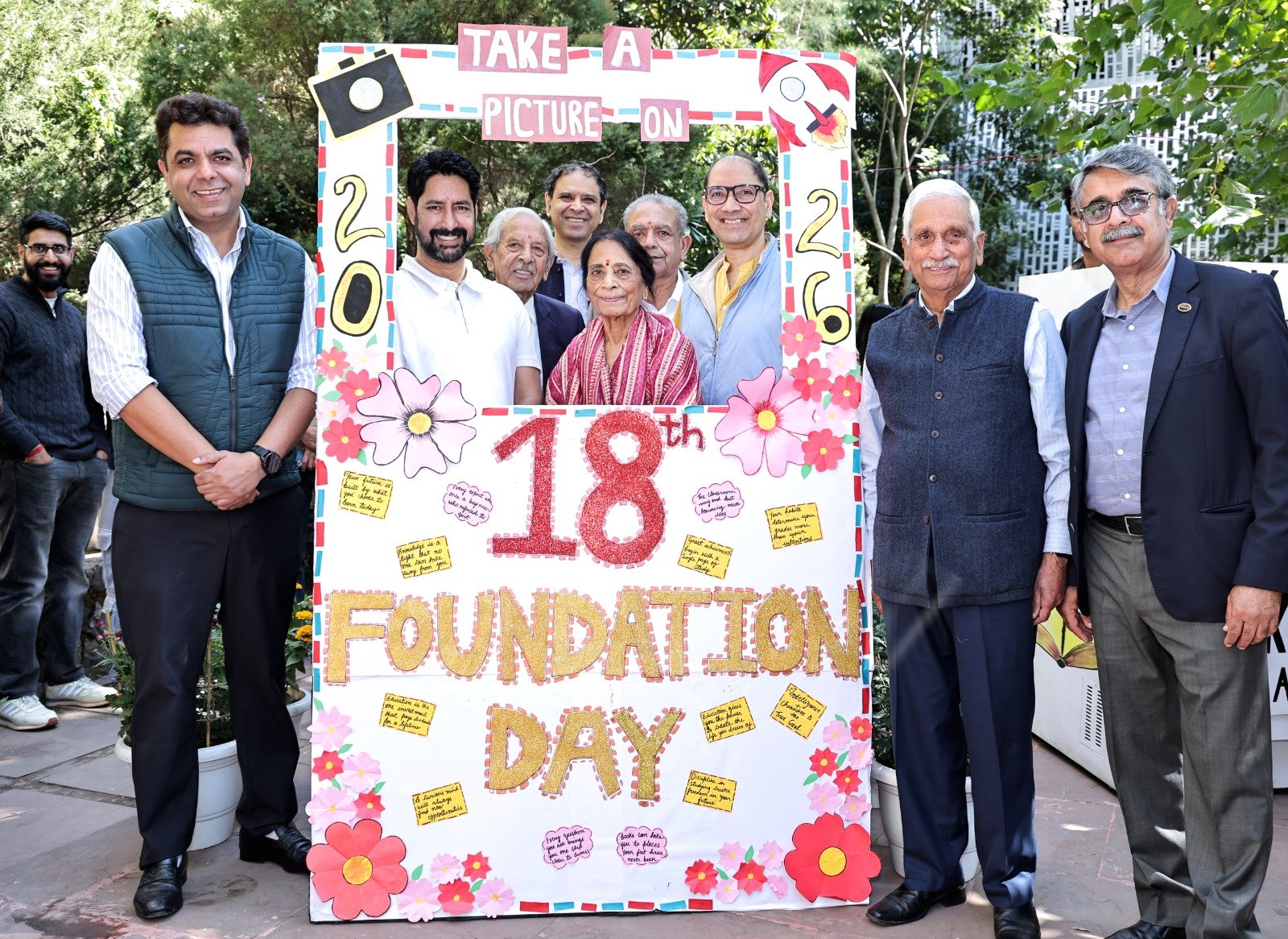
Shoolini University celebrated its 18th Foundation Day on Friday with the theme “Shoolini 2.0”. It set out an ambitious plan for its next phase: stronger research, new campus facilities and a place among the world’s leading universities.
The celebrations looked back on the university’s journey from a small-town institution in Himachal Pradesh to a globally ranked university. The celebration also marked a renewed focus on academic excellence, research-led innovation, sustainability and service to society.
The chief guest, Mr. Vinod Sultanpuri, Member of HP Legislative Assembly (MLA) from Kasauli, inaugurated several new and upgraded facilities on the campus. These included the BioTech Gallery and the Food and Nutrition Lab in E Block, a faculty room in D Block, the renovated Open and Distance Learning (ODL) Complex, Shoolini Village Hostel in B Block, Shoolini Residence Girls Hostel and the renovated Aryan Girls Hostel. A solar-wind hybrid power plant and an organic waste composter were also opened to make the campus greener. Earlier in the day, the new School of Psychology and renovated laboratories in A and B Blocks were inaugurated.
Addressing the gathering, Mr Sultanpuri stressed the value of rational thinking and a positive academic environment. He said universities must look beyond buildings and academic results, and give equal importance to faculty well-being, creativity and the freedom to try new ideas.
Prof. Ashish Khosla, President, AI and Innovations, spoke about the importance of Shoolini 2.0 as the university’s next stage of growth.
Pro-Chancellor Prof. Vishal Anand said Shoolini had built a strong research culture despite limited resources. He spoke about the university’s goal of entering the world’s top 100 universities and called for faster growth in both quality and scale, along with more learning beyond the classroom. He also shared plans for new facilities, including an Olympic-standard multi-sport complex, an auditorium, a museum hub and a community space for cultural exchange, theatre, music and the arts.
Vice-Chancellor Prof. Atul Khosla said Shoolini aimed to become a role model for universities worldwide. He said a great university was defined not only by its buildings but also by the quality of its research, the success of its students, and its creativity, well-being and impact on society.
“Over the next ten years, our vision is to make Shoolini one of the happiest and most beautiful universities in the world, beautiful in its surroundings, its thinking and its spirit,” he said. He added that universities could drive economic growth, inspire communities and support regional development, and that Shoolini contributed to the economy of Himachal Pradesh and Solan district through research, innovation and work with local communities.
An exhibition held as part of the celebrations showed how the university’s research is tackling everyday problems.
Dr Ritesh Banerjee of the School of Biological and Environmental Sciences presented a Photovoltaic Electric Herbarium Machine. It uses solar energy and controlled heating to dry and preserve plant specimens, offering a faster alternative to the traditional process, which can take seven to 20 days.
CYTOAURA showed an image-based system for tracking bacterial growth. A camera photographs the samples, and software reads changes in the cloudiness of the liquid to estimate how fast the bacteria are growing.
The Green Algal Air Purifier uses living algae to absorb carbon dioxide and release oxygen, offering a natural way to improve indoor air. Researchers also displayed an electro-fermentation prototype that uses electricity and nanoparticles to speed up ethanol production. It aims to cut production time from about 15 days to three days.
A biochar-based vertical constructed wetland prototype was also demonstrated. It is the basis of a project sanctioned by the Ministry of Education under the Unnat Bharat Abhiyan 2.0 scheme, now under way at Sultanpur village as part of a community development programme. The system treats household wastewater by passing it through layers of sand, gravel, pine-needle biochar and soil, while the roots of plants grown in it help microbes break down contaminants. The treated water can be reused for farming and horticulture, toilets, construction work and car washing. The project supports UN Sustainable Development Goals 6, 7, 12 and 13.
The School of Bioengineering and Food Technology displayed products made from underused Himalayan resources. These included rhododendron chutney, kachnar and garlic pickle, sand pear jam, plum candy, dehydrated apple products, fruit- and vegetable-based wines and Himgrain Rice Puffs.