


Mohan Rakesh’s timeless play gets an emotionally charged staging at Gaiety Theatre, turning a story of an incomplete family into a powerful reflection on modern relationships
PRENEETA SHARMA
Shimla
The stage at the historic Gaiety Theatre fell silent as the complicated world of family relationships unfolded through Mohan Rakesh’s celebrated play ‘Aadhe Adhure’. What began as a theatrical performance soon turned into an intimate exploration of loneliness, dissatisfaction, expectations and the fragile bonds that hold a family together. By the time the curtains came down, the play had left the audience with not just applause, but questions about their own relationships and the meaning of completeness in life.
Staged on the concluding day of the third Shyam Dahire Rang Mahotsav, the production brought Rakesh’s powerful examination of a fractured middle-class family to life with considerable emotional intensity. The play, known for its sharp portrayal of strained relationships and unfulfilled desires, found a particularly strong resonance with the audience as the performers explored the emotional distance that can exist between people who live under the same roof.
The production was the result of nearly two months of rehearsals, preparation and collective effort. For the team, however, the journey was not merely about memorising dialogues or perfecting movements on stage. It was about understanding the psychology of characters who are caught between what they want from life and what life eventually gives them. That preparation was visible in the performance, where moments of confrontation were balanced with silence, hesitation and understated emotion.
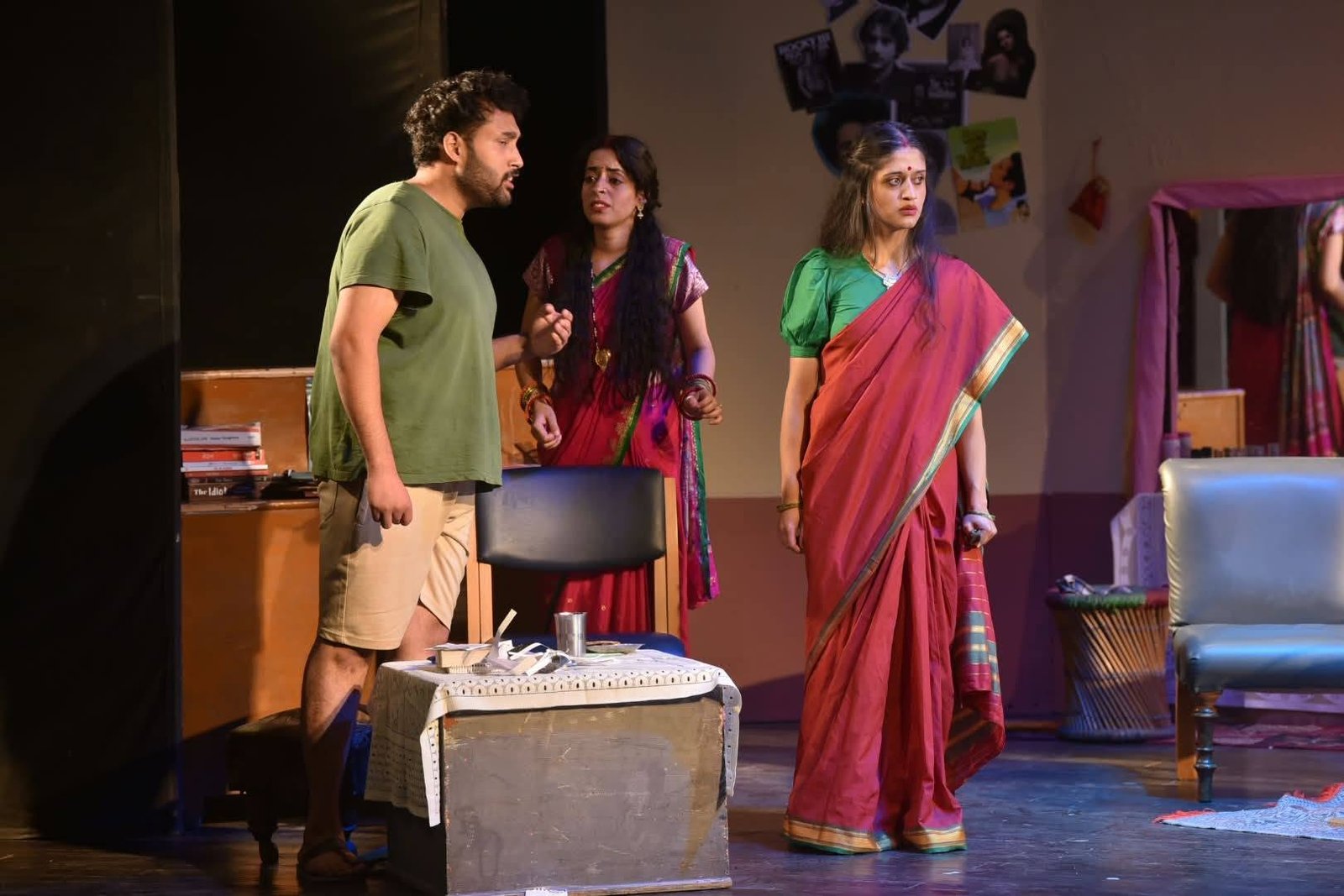
At the centre of Aadhe Adhure is Savitri, a woman struggling to find emotional and personal fulfilment in a life that appears increasingly fragmented. Her relationship with Mahendranath, along with the experiences of other members of the family, exposes the frustrations and contradictions that quietly accumulate within a household. Rakesh’s writing does not offer easy answers. Instead, it forces the audience to confront an uncomfortable question: Can a person ever find completeness in another human being when everyone is carrying their own sense of incompleteness?
That question became particularly powerful in the Shimla staging. The actors did not merely perform their characters; they inhabited their conflicts. Kritika Sharma, Preeti Thakur, Adarsh Chauhan, Yakshita and Abhishek Verma brought different shades of vulnerability, anger, disappointment and hope to the stage. Their performances helped transform the play from a literary classic into a deeply human experience that felt immediate and contemporary.
Abhishek Verma, besides performing, also contributed as the assistant director, playing an important role in shaping the production. The team’s interpretation retained the emotional core of Rakesh’s work while allowing the characters and their conflicts to speak naturally to a present-day audience.
The impact of the performance was strengthened by the technical elements that worked quietly behind the actors. Kedar Thakur guided the performers and took responsibility for the lighting, using the stage illumination to complement the changing emotional tone of the scenes. Rohit Kanwal and Lucky Verma added another layer to the production through their music, while Lalit Bhardwaj’s set design created an intimate stage environment in which the family’s conflicts could unfold convincingly.
Behind the curtain, Sanjana Chauhan, Nancy Rathore and Neeraj Thakur formed the backstage team whose efforts ensured that the performance moved smoothly. Their contribution, though largely invisible to the audience, remained an essential part of the production.
For the team, the success of Aadhe Adhure was also a story of people coming together. The production acknowledged the support of Rajesh Bhardwaj, whose encouragement and faith were described as an important source of strength throughout the project. The team also expressed gratitude to Jawahar Kaul, Achhar Singh Parmar, Bharti Kuthiala, Kapil Dev Sharma of The Beginners, Shaurya Veer Sagar of Shaurya Gate, Sonu Bhai and Vikas Gautam (Biku) for their support and contribution.
The appreciation extended beyond the performance itself. After almost two months of hard work, the team described the production as a journey built on trust, friendship, learning and collective passion for theatre. Every rehearsal, technical challenge and late-hour preparation ultimately found its meaning when the audience connected with the story.
What made the evening memorable was the way Aadhe Adhure blurred the boundary between the stage and the audience. The family portrayed in the play may have been fictional, but its tensions felt familiar and the unspoken resentment between partners, the pressure of expectations, the search for emotional security and the feeling of being surrounded by people yet remaining alone.
Mohan Rakesh wrote Aadhe Adhure decades ago, but its emotional questions remain remarkably relevant. The Shimla production demonstrated why the play continues to find space on contemporary stages: because families may change, circumstances may change, but the human desire for acceptance, companionship and completeness remains unchanged.
As the final scene ended and the lights faded at Gaiety Theatre, the performance left behind something more enduring than applause. It left the audience thinking about the relationships they often take for granted and about the unfinished stories that exist behind seemingly ordinary doors.
For the artists, Aadhe Adhure was a play. For the audience, it became a mirror. And for the entire team, it was a two-month journey that finally found its meaning under the stage lights.