



Highlights India–UAE Strategic Partnership, Skill Development and Rules-Based Mobility at Abu Dhabi Forum
Dubai
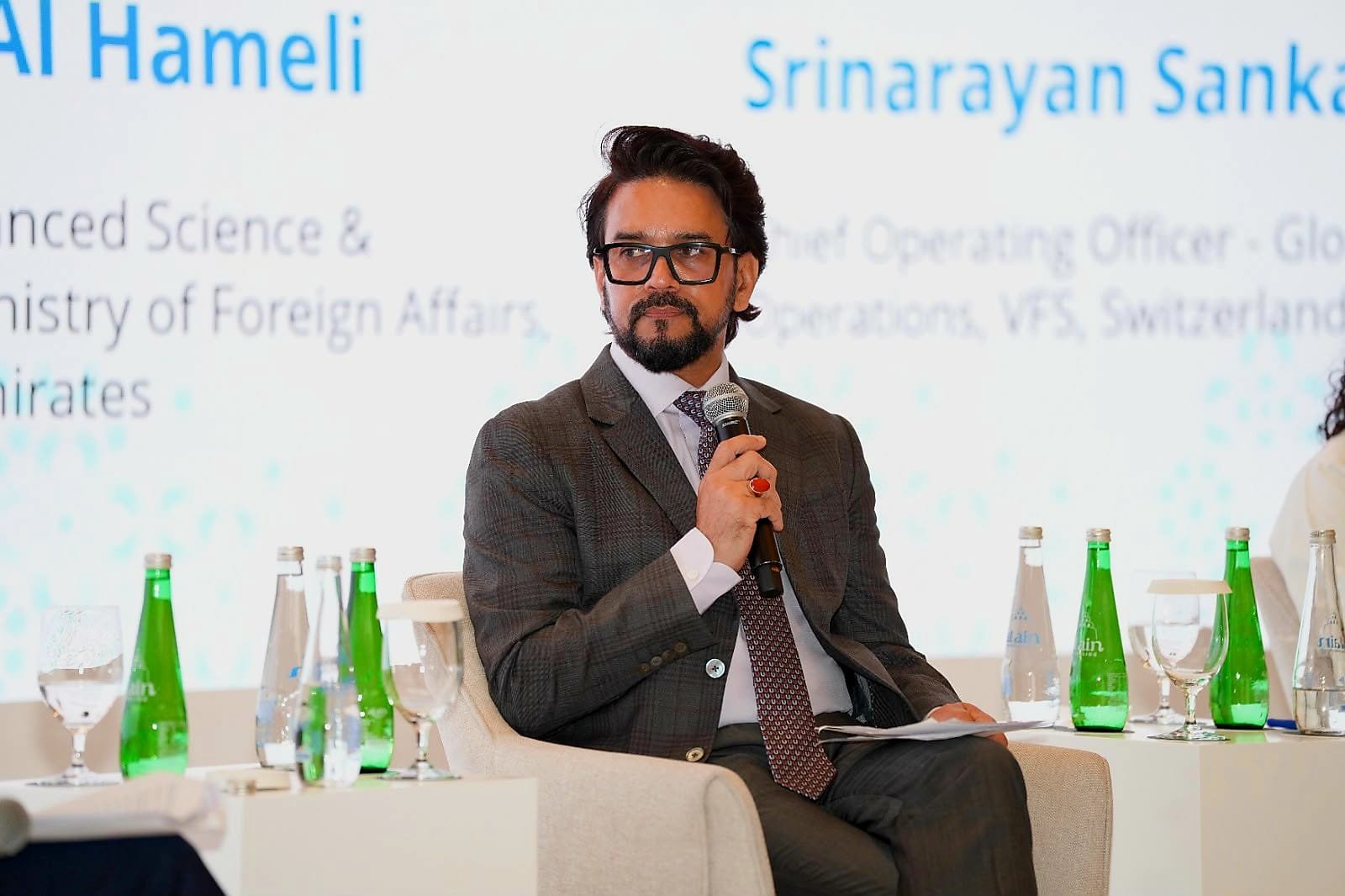
Former Union Cabinet Minister and senior parliamentarian Anurag Singh Thakur presented India’s vision for harnessing its demographic dividend and strengthening global talent partnerships at Raisina Middle East 2026 in Abu Dhabi. Addressing an international panel on the theme Demography Is Destiny: People, Places, and Perceptions, he highlighted how India’s young population can become a powerful driver of global development, sustainable economic growth and cross-border innovation when supported by education, skills and opportunities.
The panel featured Nouf Ali Al Hameli, Adviser for Advanced Science and Technology at the UAE Ministry of Foreign Affairs; Srinarayan Sankaran, Chief Operating Officer of Global Operations at VFS; and Nadia Verjee, Executive Director at Expo City Dubai. The discussion was moderated by Aakanksha Tangri, Founder and CEO of Re:Set.
Thakur emphasised that a large population does not automatically translate into a demographic advantage. Converting demographic potential into national strength requires sustained investment in education, healthcare, skill development and capacity building. He highlighted key initiatives under Prime Minister Narendra Modi’s leadership, including the National Education Policy 2020, the Skill India Mission and Digital Public Infrastructure. These initiatives, he noted, are helping empower India’s approximately 700 million citizens under the age of 25 and strengthen the country’s journey towards Viksit Bharat @2047.
Highlighting the deep and multifaceted strategic partnership between India and the United Arab Emirates, Thakur appreciated the UAE’s forward-looking approach to human capital and talent mobility as long-term drivers of economic growth. He noted that the Indian diaspora of approximately four million people in the UAE serves as a vital bridge between the two nations.
He also underlined the growing economic relationship between the countries, with bilateral trade exceeding US$100 billion under the Comprehensive Economic Partnership Agreement (CEPA). Cooperation in local-currency settlements, UPI integration and strategic investments is further expanding the scope of bilateral engagement.
Thakur called for structured, treaty-based international mobility frameworks that promote transparency, predictability and mutual trust while facilitating the movement of talent across borders. He observed that India is increasingly emerging as both a major global talent partner and an attractive destination for investment and economic activity, supported by expanding world-class infrastructure, rapid industrialisation and the growth of global capability centres.
Concluding his address, Thakur urged international partners to view human capital not merely as an administrative challenge but as a strategic opportunity to build lasting partnerships, encourage innovation and advance shared prosperity over the coming decade.