


Kullu: Often associated with shopping, new travel trends and social media influence, a group of young Indians is trying to create a different trend in the Himalayas — adopting villages not with money, but with their ideas, time, skills and willingness to contribute.
Here, ‘adopting a village’ does not mean taking financial responsibility for it. Instead, it means building a meaningful relationship with a place and its community, where young people can contribute their knowledge, skills and time in ways that can make a difference.
Led by Chandigarh-based Nikhil Sharma, the initiative is bringing together youngsters from different parts of the country to connect with Himalayan communities. The idea is not simply to travel through the mountains, but to spend time with local people, understand their challenges and contribute to environmental and community-focused efforts using their own skills.
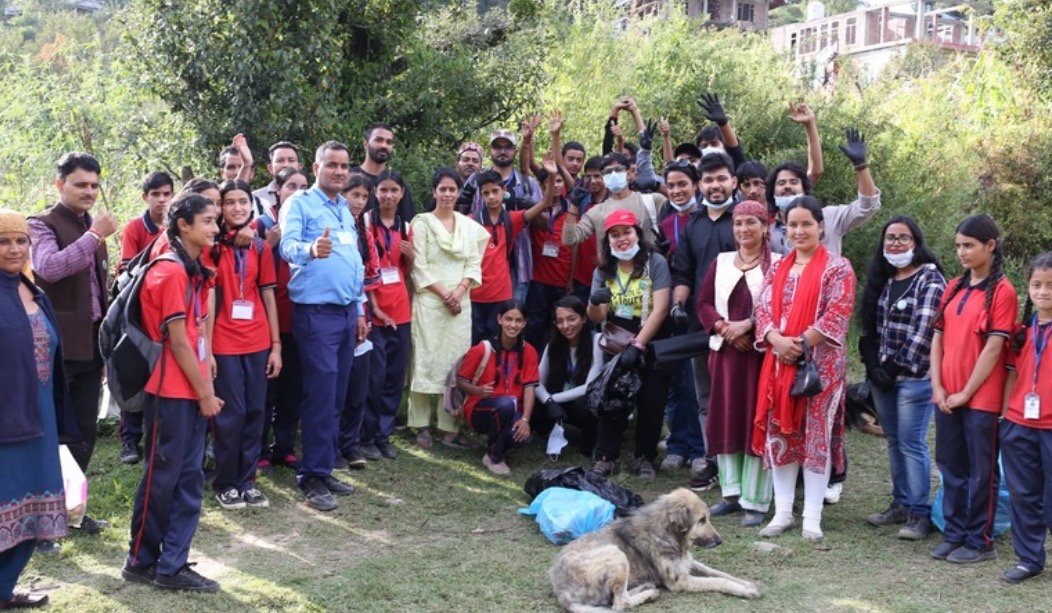
As part of this initiative, youngsters recently visited Manyashi, Deori and Sarahan villages in Sainj Valley, where they interacted with school students and local residents on issues related to environmental conservation and responsible tourism.
The initiative also reflects a changing approach among young travelers. For many, the mountains are no longer just destinations to visit, take pictures and share on social media. A section of young travelers is looking to build a deeper and more meaningful connection with the places they visit and the communities that call these places home.
According to Nikhil, the idea is to encourage youngsters to look at the Himalayas differently. A village, he said, should not be seen simply as a place where one stays for a few days before moving on. If a person has knowledge, a skill, a new idea or simply the willingness to contribute, they can do something meaningful for the community.
During their visits to schools in Sainj Valley, the youngsters interacted with students on plastic waste, its impact on the environment and the importance of responsible waste disposal. Games and interactive activities were used to engage children with environmental issues, while drawing and other creative activities encouraged younger students to think about clean villages and caring for nature.
The group also met village pradhans and local residents to understand issues related to cleanliness, waste management and village development. The effort, therefore, was not about bringing ready-made solutions from outside, but about first listening to the community and then exploring possible solutions together.
Nikhil now plans to take this model to other parts of Himachal Pradesh. Earlier, similar efforts were undertaken during treks to Kareri and Triund in the Dhauladhar ranges of Kangra district, where the initiative received a positive response from local communities.
The larger aim, he said, is to bring together young people from different parts of the country and create a wider network of such journeys, where travel becomes an opportunity to learn, contribute and build meaningful connections with Himalayan communities.