


From daughters returning home to mothers recovering after childbirth, this traditional Himachali preparation is rooted in care, celebration and a culinary culture passed down through generations.
PRENEETA SHARMA
In Himachal Pradesh, food is often more than a culinary experience. It is closely connected with family, traditions, celebrations and emotions. Among the state’s many traditional preparations, Khinda, also known as Barhi, holds a special place, particularly for the memories and customs associated with it.
According to Chef Nand Lal, Khinda/Barhi is traditionally prepared on special occasions and served as a gesture of warmth and affection, especially when a daughter returns to her parental home after marriage. It is also associated with nourishing mothers after childbirth, reflecting an age-old tradition in which food was regarded as an important expression of care and well-being.
“Khinda/Barhi is not just a traditional dish; it represents the warmth of Himachali homes, where food has always been a way of expressing love, care and hospitality,” Chef Nand Lal said.
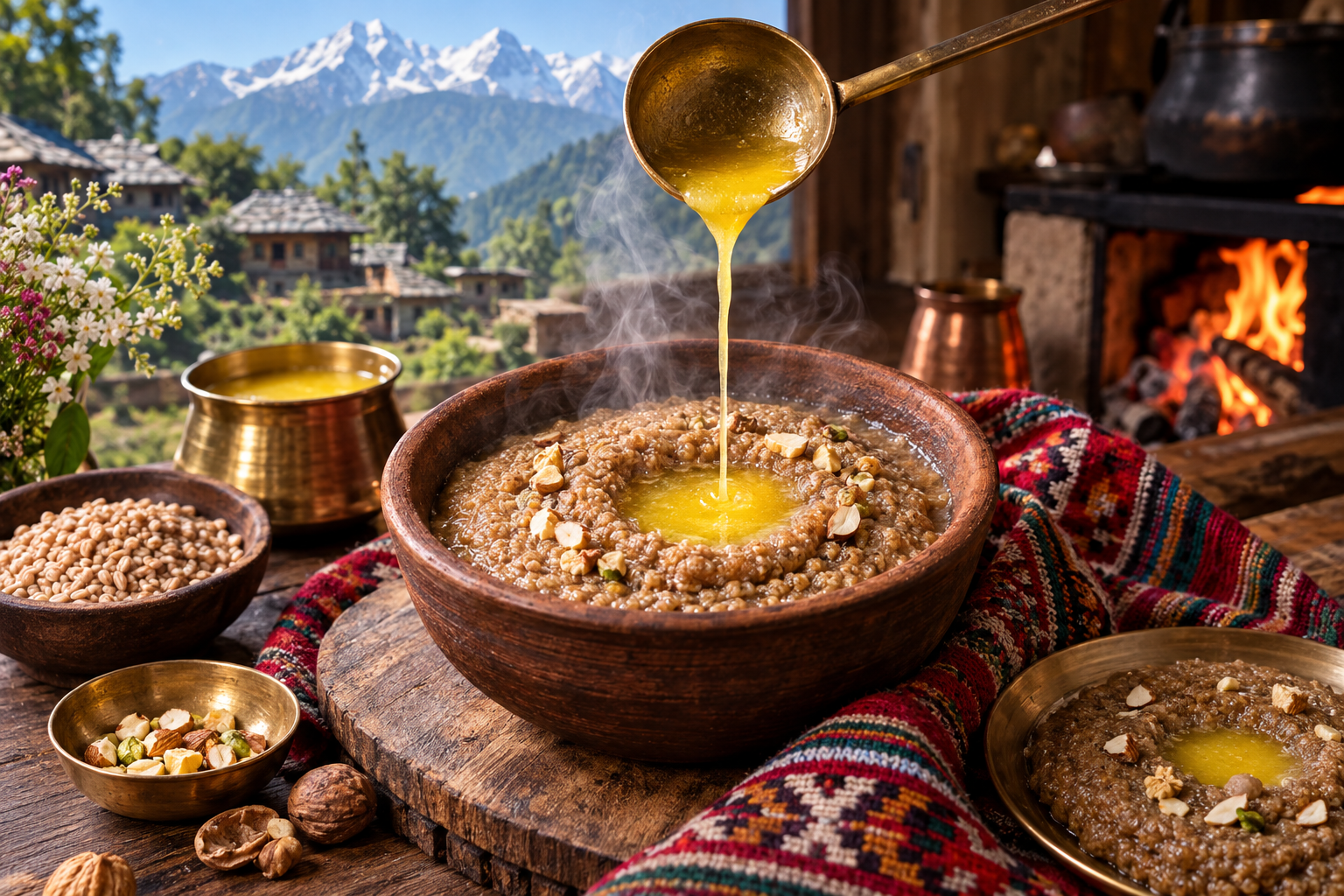
Khinda/Barhi is traditionally prepared using wholesome ingredients and served generously with desi ghee. The richness of the dish is not merely about flavour. Traditionally, ghee-based preparations have been valued for their energy and nourishing qualities. In many Himachali households, preparing such food has itself been an act of affection, with mothers and grandmothers passing recipes and cooking techniques from one generation to the next.
The significance of Khinda/Barhi, however, goes beyond its ingredients. It represents a time when food was deeply embedded in family relationships. A daughter returning home was welcomed with special food, while a new mother was cared for through traditional nourishing preparations. In this context, Khinda/Barhi became a symbol of love, hospitality, celebration and strength, with its preparation carrying an emotional meaning that extended far beyond the dining table.
The dish also offers a glimpse into the traditional kitchens of Himachal Pradesh, where recipes were preserved largely through experience and oral tradition. Before modern cooking appliances became common, many preparations were slowly cooked over traditional wood fires. Mothers taught their daughters the right consistency, ingredients and methods not necessarily through written measurements, but by allowing them to observe and participate in the cooking process. This informal transfer of knowledge helped preserve Himachal’s culinary traditions across generations.
For Chef Nand Lal, the importance of such traditional dishes lies in preserving the connection between food and culture. “When we preserve a traditional recipe, we are also preserving the stories, customs and memories associated with it. These dishes tell us how our ancestors celebrated, cared for their families and welcomed their loved ones,” he said.
In an age of changing lifestyles, migration and rapidly evolving food habits, many traditional recipes are at risk of disappearing from everyday kitchens. The revival and documentation of dishes such as Khinda/Barhi therefore assume greater cultural significance. Preserving a traditional recipe is not simply about retaining a particular flavour; it is also about keeping alive the stories, customs and relationships connected with it.
Khinda/Barhi is particularly evocative because of its association with daughters returning to their maternal homes. For many families, preparing a special traditional dish is part of the emotional welcome extended to a daughter. It carries a simple but powerful message—that no matter how far life takes her, her parental home remains a place of warmth, comfort and belonging.
The generous use of desi ghee also reflects the traditional philosophy behind festive and nourishing food in the hills. A serving of hot Khinda/Barhi topped with ghee evokes the warmth of a traditional Himachali kitchen, where hospitality was often expressed through generosity. Food was not measured only by quantity or taste; the time and effort invested in preparing and serving it were themselves gestures of respect and affection.
As interest in indigenous food cultures grows, traditional Himachali preparations are finding renewed attention among food enthusiasts, chefs and cultural organisations. For Chef Nand Lal, bringing these preparations back into public consciousness is also a way of ensuring that younger generations remain connected with their culinary roots.
“Our culinary heritage should not remain confined to memories. The younger generation should know these traditional foods, understand their significance and take pride in the culinary traditions of Himachal Pradesh,” he said.
Ultimately, Khinda/Barhi is a story of food becoming a language of emotion. It speaks of a mother caring for her family, a daughter returning home, a community celebrating together and generations preserving the knowledge of their ancestors. Its value lies as much in these memories as in its taste.
At a time when modern food culture increasingly favours convenience and speed, Khinda/Barhi reminds us of a different relationship with food which is one rooted in patience, tradition and human connection. It is more than a traditional Himachali preparation; it is a culinary memory, a symbol of familial affection and a meaningful part of Himachal Pradesh’s rich culinary heritage.